

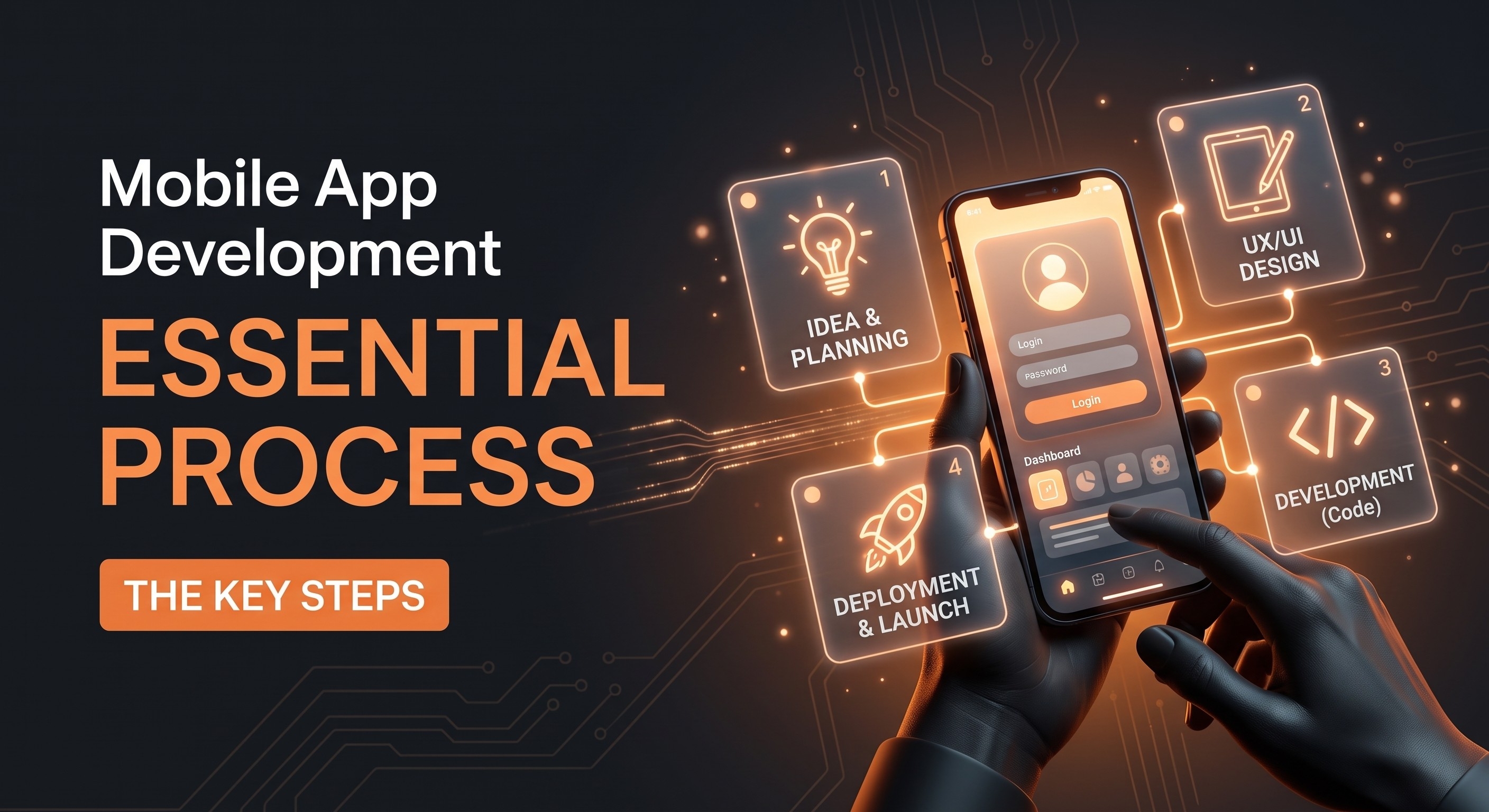
Kaizen Digital Hub provides app development services for businesses that need reliable mobile applications, web applications, and custom digital products. We manage the complete development process, from early product planning and UI/UX design to technical development, testing, deployment, and post-launch improvement.
Whether you are launching a customer-facing application, improving an existing digital product, or automating an internal business process, we focus on creating a solution that is practical, easy to use, and aligned with a clear business objective.
Custom Applications Built Around Real Business Needs
A successful application should solve a specific problem and support a clear user journey. It should also remain practical to manage as the business, number of users, and operational requirements grow.
Before recommending a development approach, we review the intended users, required features, business workflows, integrations, platform requirements, and long-term maintenance expectations. This helps define a focused product direction and reduces unnecessary features that may increase cost and complexity without adding meaningful value.
Our App Development Services
Our app development services cover mobile applications, browser-based platforms, user experience design, backend systems, third-party integrations, deployment, and ongoing product support. Each service is planned according to the actual requirements of the project rather than applying the same technical approach to every product.
Mobile App Development
We develop mobile applications for customer services, booking systems, delivery operations, marketplaces, membership platforms, internal teams, and other business use cases.
Depending on the project, the application may be developed for Android, iOS, or both platforms. We consider the intended audience, required device features, performance expectations, budget, launch priorities, and future maintenance before recommending a suitable development approach.
Android and iOS App Development
Android and iOS applications may have different interface requirements, device capabilities, permissions, and publishing processes. We plan these platform-specific requirements during the early stages of the project so the user experience and technical implementation remain consistent with the product goals.
Where a product requires deeper access to platform-specific features, we assess whether native development would provide better performance and flexibility. When the required functionality can operate consistently across platforms, a shared development approach may be more practical.
Cross-Platform App Development
Cross-platform app development allows Android and iOS applications to share a significant portion of the same codebase. This can reduce duplicated development effort and make future updates easier when the product requirements are similar across both platforms.
However, cross-platform development is not automatically the right solution for every application. We review performance needs, device-level integrations, interface complexity, security requirements, and the future product roadmap before recommending it.
Web Application Development
We develop browser-based applications for businesses that need more functionality than a conventional informational website. These may include customer portals, booking platforms, management dashboards, subscription systems, reporting tools, inventory solutions, workflow platforms, or custom operational software.
Each web application is planned around user roles, permissions, data requirements, administrative controls, and the processes it needs to support. The interface is designed to work across appropriate devices while keeping ongoing management practical for the business.
UI/UX Design and Interactive Prototyping
An application should help users understand what to do, where to go, and how to complete important actions without unnecessary confusion.
Our UI/UX process focuses on user journeys, content hierarchy, navigation, interface consistency, responsive behaviour, accessibility considerations, and clear feedback during important interactions.
Before full development begins, we create wireframes and interactive prototypes for the main screens and workflows. This allows stakeholders to review the proposed experience and resolve structural issues before changes become more difficult and expensive.
Backend Development and API Integration
Many applications rely on secure communication between the user interface, databases, administrative systems, and external platforms. We plan backend functionality around the data, permissions, workflows, and performance requirements defined within the project scope.
Where appropriate, applications can be connected with payment gateways, maps, authentication systems, analytics platforms, notification services, inventory software, customer-management tools, and other compatible third-party services.
The integration approach is selected according to the provider’s technical requirements and the needs of the application.
App Maintenance and Product Improvement
Launching an application is the beginning of its operational lifecycle. Over time, the product may require compatibility updates, security improvements, issue resolution, performance adjustments, or changes based on user feedback.
We provide app maintenance and improvement services according to the application’s technology, usage, integrations, and support requirements. Larger features or changes are assessed separately so their effect on the existing product, timeline, and testing requirements remains clear.
The original content covered the main service categories in strong topical depth. This version keeps those important entities while making the writing more concise and easier to read.
Our App Development Process
1. Discovery and Product Planning
We begin by understanding the problem the application needs to solve, the people who will use it, and the outcome it should support.
During discovery, we review the required workflows, existing systems, integrations, operational constraints, and launch priorities. We also separate essential first-release features from ideas that may be more suitable for a future phase.
This produces a clearer product direction and helps everyone involved understand the application’s purpose before design and development begin.
2. Requirements and Technical Scope
The project requirements are documented in enough detail to guide design, development, testing, and approval.
This may include user roles, core functionality, administrative controls, platform requirements, data needs, notifications, security considerations, third-party integrations, and acceptance criteria.
A defined scope reduces avoidable ambiguity and provides a practical reference when new ideas or change requests arise during the project.
3. Wireframing and UI/UX Design
We map the main user journeys and create wireframes showing how screens, information, and controls will be organised.
After the structure is approved, the visual interface is designed to reflect the brand while remaining clear and appropriate for the intended users and devices.
Interactive prototypes provide an opportunity to review important workflows before full technical implementation begins.
4. Application Development
The approved requirements and designs are converted into a functional application using technology suited to the product’s platform, features, integrations, scale, and maintenance expectations.
Development is organised into manageable stages. This allows completed features to be reviewed and technical risks to be identified before they affect a larger part of the product.
Within the approved scope, we apply maintainable coding practices, appropriate access controls, input validation, secure data handling, and practical error management.
5. Testing and Quality Assurance
Before launch, the application is tested against the agreed requirements and important user journeys.
Testing may cover functionality, navigation, forms, layouts, user permissions, integrations, error states, supported devices, supported browsers, and performance-related issues.
Identified defects are documented, prioritised, and addressed before the release is approved.
6. Deployment and Launch Support
Once the approved release is ready, we support deployment to the relevant production environment.
For mobile applications, this may include preparing release builds and assisting with submission to Google Play or the Apple App Store. Final publication remains subject to each platform’s account requirements, policies, and review process.
For web applications, deployment may include production configuration, hosting setup, database preparation, domain or subdomain connection, access management, and final launch checks.
7. Monitoring and Product Improvement
Real user activity can reveal opportunities that were not fully visible during planning.
Where analytics and monitoring are included, we can review adoption, important user journeys, application errors, performance indicators, and user feedback. Future improvements can then be prioritised according to user value, business importance, technical dependencies, and implementation effort.
The seven-stage process from the previous content was structurally sound. It has been retained because it demonstrates how the service is delivered without adding unnecessary company history or filler.
Why Choose Kaizen Digital Hub for App Development?
Business-Focused Product Planning
We begin with the problem the application needs to solve rather than assuming that every idea requires a complex custom product.
Features are considered according to user needs, operational value, launch priorities, available resources, and long-term maintenance requirements. This helps create a more focused first release and reduces unnecessary development cost.
Coordinated Design and Development
Application design and technical implementation affect one another throughout the project.
By coordinating user experience, interface design, frontend development, backend systems, and integrations, we reduce gaps between the approved concept and the final product.
Stakeholders review the work at agreed stages instead of waiting until the entire application is complete.
Clear Scope and Communication
Before development begins, we define the approved features, deliverables, responsibilities, assumptions, timeline, and project requirements.
When a request falls outside the agreed scope, its effect on cost, schedule, dependencies, and existing functionality is reviewed before additional work begins.
Project communication focuses on completed work, upcoming priorities, active decisions, and known risks.
Ownership and Handover
Source-code access, hosting responsibilities, developer accounts, third-party services, administrative credentials, and ownership arrangements are clarified within the project agreement.
At handover, the client receives the access, documentation, and training included in the approved scope. Third-party platforms and services continue to operate under their own account and licensing terms.
Maintainable Technical Foundations
We structure each application around realistic usage expectations, business workflows, integrations, administrative requirements, and the likely future roadmap.
The objective is not to add unnecessary technical complexity at the beginning. Instead, we create a maintainable foundation that can be improved as the product and business requirements evolve.
This section retains the strongest ideas from the previous draft—planning, communication, ownership, and maintainability—without using unsupported claims such as “best” or “industry-leading.”
Applications Connected to Measurable Goals
An application should support a clear operational or commercial result.
Depending on the project, that result may involve increasing completed bookings, improving customer self-service, reducing manual administration, supporting online transactions, managing inventory more efficiently, or providing faster access to important business information.
During discovery, we identify the outcomes that matter and determine which actions can be measured reliably. Where analytics and event tracking are included, the application can monitor important user activity while following applicable privacy, consent, and data-handling requirements.
Ready to Build Your Application?
Tell us what you want to build, who will use it, and the main problem it needs to solve.
Kaizen Digital Hub will review your requirements and recommend a suitable product scope, development approach, and next step.